AI+ Policy Maker™

  • AI-Driven Policy Design: Leverage AI to transform policy creation and improve decision-making efficiency
  • Ethical Policy Making: Ensure fairness and transparency while integrating AI in responsible policy frameworks
  • Impact-Centric Frameworks: Create AI-powered policies that drive measurable outcomes and enhance governance efficiency
Enroll Now
AI+ Policy Maker™
Self-Paced: $195
Instructor-Led: $295

At a Glance: Course + Exam Overview

Category AI Professional, AI Specialization, All Courses, Available Now, English, Government Policy Analyst, Language
Program Name AI+ Policy Maker™
Duration Instructor-Led:1 day (live or virtual) | Self-Paced:8 hours (1 Day)
Prerequisites Familiarity with AI basics, including machine learning and data science fundamentals. Awareness of policy-making processes and governance structures. Understanding of data privacy principles and ethical concerns relevant to technology and AI. Ability to interpret data-driven insights, as these are crucial for policy formulation based on AI applications.
Exam Format 50 questions, 70% passing, 90 minutes, online proctored exam

What You'll Learn

AI in Governance and Public Policy

Gain insights into how AI can enhance governance, service delivery, and policy-making. Learn from case studies on AI in sectors like healthcare, education, and transportation.

Ethical, Social, and Human Rights Implications of AI

Understand the ethical considerations surrounding AI, including fairness, transparency, and accountability. Develop strategies to mitigate bias and protect human rights in AI systems.

Legal and Regulatory Frameworks for AI

Dive deep into global AI regulations, data privacy laws, and intellectual property considerations. Master the nuances of developing policies that ensure legal compliance and ethical AI deployment.

AI Strategy and Implementation

Learn to craft AI strategies at the national level, integrating AI with public sector policies, aligning stakeholders, and addressing economic inequalities through AI solutions.
Certification Modules

Module 1: Introduction to Artificial Intelligence

  • 1.1 Understanding AI: Definitions and Concepts
  • 1.2 Historical Development of AI
  • 1.3 Current AI Technologies and Applications
  • 1.4 AI Trends and Future Directions
  • 1.5 AI Terminology and Jargon for Policy Makers

Module 2: AI in Governance and Public Policy

  • 2.1 Role of AI in Government and Public Services
  • 2.2 Case Studies of AI in Public Administration
  • 2.3 AI for Regulatory Compliance and Enforcement
  • 2.4 Challenges of AI Adoption in Government
  • 2.5 Policy Considerations for AI Implementation

Module 3: Ethical, Social, and Human Rights Implications of AI

  • 3.1 Principles of AI Ethics
  • 3.2 Bias, Fairness, and Discrimination in AI Systems
  • 3.3 Privacy and Data Protection
  • 3.4 Socio-Economic Impacts of AI
  • 3.5 AI and Human Rights

Module 4: Legal and Regulatory Frameworks for AI

  • 4.1 Overview of AI Regulations Globally
  • 4.2 Data Governance and Privacy Laws
  • 4.3 Intellectual Property Rights in AI
  • 4.4 Liability and Accountability in AI Systems
  • 4.5 Developing AI Policies and Legislation

Module 5: AI Risk Management and Security

  • 5.1 AI Safety and Security Challenges
  • 5.2 Risk Assessment and Management Strategies
  • 5.3 Cybersecurity and AI
  • 5.4 Ensuring Reliability and Resilience
  • 5.5 Incident Response and Crisis Management

Module 6: Economic Impacts of AI

  • 6.1 AI and the Future of Work
  • 6.2 AI’s Role in Economic Growth
  • 6.3 Supporting AI Innovation and Entrepreneurship
  • 6.4 AI in Developing Economies
  • 6.5 Addressing Economic Inequalities

Module 7: AI Strategy, Implementation, and Collaboration

  • 7.1 Developing National AI Strategies
  • 7.2 Building AI Capabilities in the Public Sector
  • 7.3 Public-Private Partnerships in AI
  • 7.4 Funding and Investment in AI
  • 7.5 Monitoring, Evaluation, and Continuous Improvement

Module 8: Shaping the Future of AI Policy

  • 8.1 Emerging AI Technologies and Trends
  • 8.2 International Cooperation on AI Governance
  • 8.3 AI and the Sustainable Development Goals (SDGs)
  • 8.4 Public Engagement and Transparency
  • 8.5 The Future of AI Policy Making

Optional Module: AI Agents for Policy Maker

  • 1. Understanding AI Agents
  • 2. Case Study
  • 3. Hands-On Activity

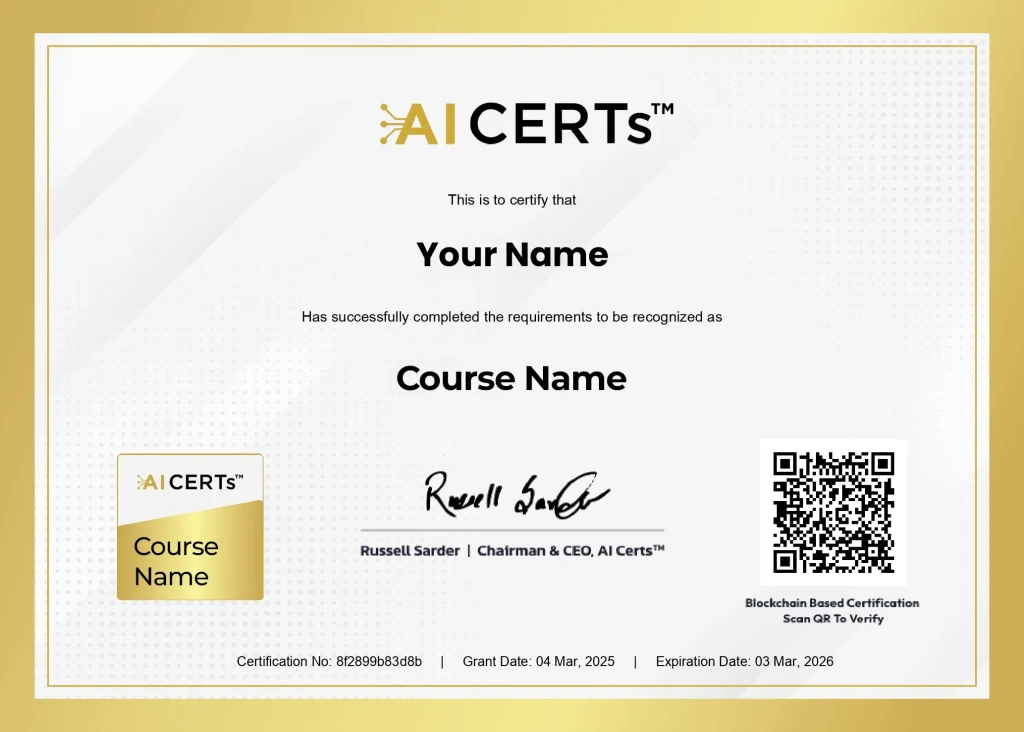
Finish the course and get certified

Course Certificate

Industry Opportunities

AI Policy Advisor

Shape AI governance frameworks, providing strategic insights to ensure ethical AI implementation in policy-making.

Public Policy Analyst

Analyze and design policies to regulate AI technologies, addressing societal, economic, and legal concerns.

Data Privacy Officer

Oversee the development and enforcement of policies to protect data privacy in AI systems.

AI Policy Researcher

Conduct research on the impact of AI technologies and help shape effective public policies for AI development and implementation.

Frequently Asked Questions

Prerequisites

Exam Details

Passing Score

70%

Format

50 multiple-choice/multiple-response questions

Exam Blueprint

Introduction to Artificial Intelligence 10%
AI in Governance and Public Policy 13%
Ethical, Social, Human Rights Implication of AI 13%
Legal and Regulatory Frameworks for AI 13%
AI Risk Management and Security 13%
Economic Impacts of AI 13%
AI Strategy, Implementation and Collaboration 13%
Shaping the Future of AI Policy 12%
Self-Paced Online

Self-Paced Online: 8 hours (1 Day)

Price: $195

Instructor-Led Online

Instructor-Led Online: 1 day (live or virtual)

Price: $295

Core AI Tools Covered