AI+ Gaming™

  • Comprehensive Skill Development
    Master AI-driven game design, adaptive storytelling, and intelligent NPC development to create immersive, data-enhanced gaming experiences.
  • Industry Recognition
    Earn a globally recognized certification that validates your expertise in integrating artificial intelligence within modern gaming environments.
  • Hands-On Learning
    Work on real-world gaming projects, from AI-based character behavior modeling to predictive player analytics, enhancing creativity and technical precision.
  • Career Advancement
    Unlock career opportunities in game development, AI simulation design, virtual production, and interactive entertainment industries.
  • Future-Ready Expertise
    Stay at the forefront of gaming innovation with cutting-edge knowledge in generative AI, immersive simulations, and intelligent gameplay systems.
Enroll Now
AI+ Gaming™
Self-Paced: $195
Instructor-Led: $295

At a Glance: Course + Exam Overview

Category AI Design & Creative, AI Professional, All Courses, Available Now, English, Game Designer, Language
Program Name AI+ Gaming™
Duration Instructor-Led:1 day (live or virtual) | Self-Paced:8 Hours (1 Day)
Prerequisites Basic Programming Skills – Comfortable with Python or similar languages. Foundational Math Knowledge – Understanding of linear algebra and probability. Intro to Machine Learning – Familiarity with ML concepts and algorithms. Game Development Exposure – Experience with Unity or Unreal Engine basics. Problem-Solving Mindset – Ability to approach challenges creatively and logically.
Exam Format 50 questions, 70% passing, 90 minutes, online proctored exam

What You'll Learn

AI-Driven Game Design

Learn how to integrate artificial intelligence into gameplay mechanics, storytelling, and player interaction.

Procedural Content Generation

Master techniques to create dynamic levels, characters, and worlds using AI algorithms.

Player Behavior Analytics

Understand how to analyze player data to personalize experiences and enhance engagement.

Reinforcement Learning & NPC Intelligence

Build intelligent agents that adapt, learn, and respond realistically within games.

Game Development Integration

Gain hands-on experience applying AI models in popular engines like Unity and Unreal for real-world projects.
Certification Modules

Module 1: Introduction to AI in Games

  • 1.1 What is AI?
  • 1.2 Evolution of AI in the Gaming Industry
  • 1.3 Types of AI in Games
  • 1.4 Benefits, Challenges, and Innovations in Game AI

Module 2: Game Design Principles using AI

  • 2.1 Understanding Game Mechanics and Player Experience
  • 2.2 Role of AI in Gameplay and Narrative Design
  • 2.3 Designing Game Environments for AI Interaction
  • 2.4 AI-Driven Behavior vs Traditional Scripted Logic
  • 2.5 Case Study: Dynamic AI and Narrative Adaptation in Middle earth: Shadow of Mordor
  • 2.6 Hands-On Exercise: Designing Adaptive NPC Behavior and Environment Interaction

Module 3: Foundations of AI in Gaming

  • 3.1 Core AI Concepts for Gaming
  • 3.2 Search Algorithms and Pathfinding
  • 3.3 AI Behavior Modeling and Procedural Content Generation (PCG)
  • 3.4 Introduction to Machine Learning and Reinforcement Learning
  • 3.5 Case Study: AI in Minecraft — Procedural Content Generation and Agent Navigation
  • 3.6 Hands-On: Implementing A* Pathfinding and FSM for NPC Behavior

Module 4: Reinforcement Learning Fundamentals

  • 4.1 Core Concepts: States, Actions, Rewards, Policies, Q-Learning:
  • 4.2 Exploration versus Exploitation in Learning Systems:
  • 4.3 Overview of Deep Q Networks (DQN) and Policy Gradient Methods
  • 4.4 Case Study: Reinforcement Learning in DeepMind’s AlphaGo
  • 4.5 Hands-On: Train a Reinforcement Learning Model on OpenAI Gym’s GridWorld

Module 5: Planning and Decision Making in Games

  • 5.1 Minimax Algorithm and Alpha-Beta Pruning
  • 5.2 Monte Carlo Tree Search (MCTS)
  • 5.3 Applications in Board Games and Real-Time Strategy (RTS) Games
  • 5.4 Case Study: Strategic AI in StarCraft II – Combining Planning Algorithms for Real-Time Strategy
  • 5.5 Hands-on Implementation: Guides on implementing the Minimax algorithm for Tic-Tac-Toe

Module 6: AI Techniques in 2D/3D Virtual Gaming Environments Basic

  • 6.1 Overview of 2D and 3D Game Environments
  • 6.2 Environment Representation Techniques
  • 6.3 Navigation and Pathfinding in 2D/3D Spaces
  • 6.4 Interaction and Behavior Systems in Virtual Environments
  • 6.5 Case Study: Navigation and Interaction AI in The Legend of Zelda: Breath of the Wild
  • 6.6 Hands-On: Building Basic Navigation and Interaction in 2D and 3D Game Environments

Module 7: Adaptive Systems and Dynamic Difficulty

  • 7.1 Adaptive Systems Overview
  • 7.2 Dynamic Difficulty Adjustment (DDA) Principles
  • 7.3 Adaptive Storytelling, Personalization, and Player Profiling
  • 7.4 AI Techniques in Adaptive Systems
  • 7.5 Implementation Strategies and Tools
  • 7.6 Case Study: Dynamic Enemy Management and Replayability with Left 4 Dead’s AI Director
  • 7.7 Hands-On: Developing an Adaptive Dynamic Difficulty System in Unity

Module 8: Future of AI in Gaming

  • 8.1 Generalist AI Agents and Transfer Learning
  • 8.2 AI-Powered Game Design and Testing Tools
  • 8.3 Ethical Considerations and AI Transparency
  • 8.4 Emerging Technologies: VR/AR AI and AI in Esports Coaching

Module 9: Capstone Project

Finish the course and get certified

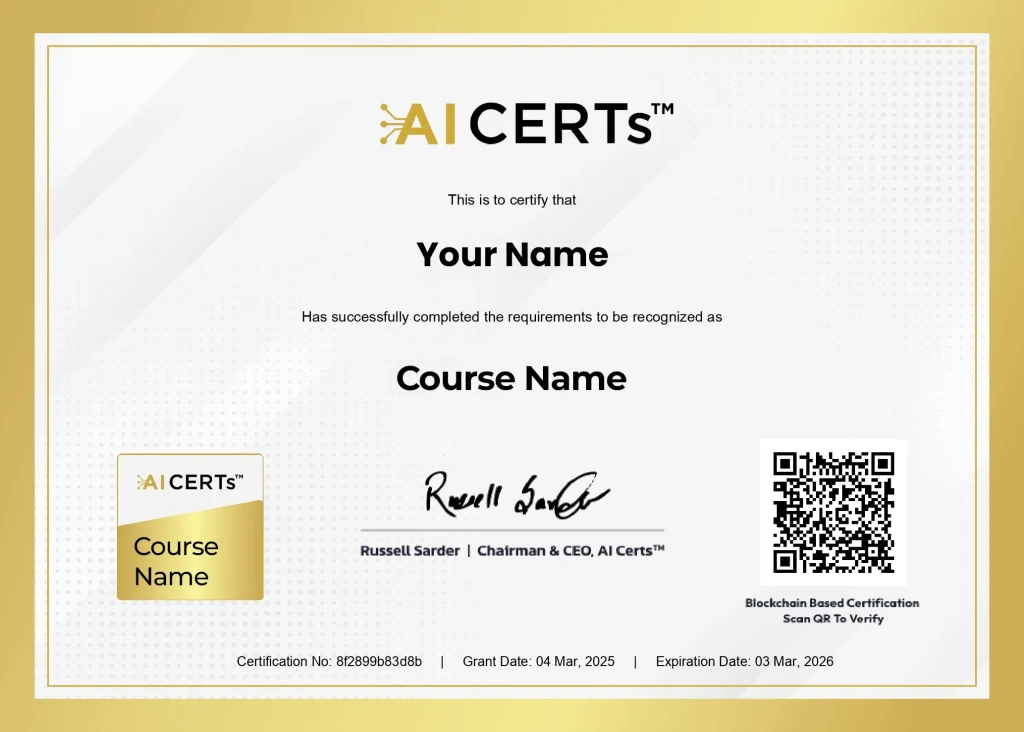
Course Certificate

Industry Opportunities

AI Game Developer

Build intelligent game systems that adapt to player behavior, enhance gameplay dynamics, and create immersive, responsive gaming experiences.

Game Data Scientist

Analyze player data to develop predictive models, personalize experiences, and optimize in-game performance and engagement metrics.

AI Systems Designer

Design and implement AI-driven mechanics such as NPC behavior, procedural world generation, and adaptive difficulty systems.

Gaming Technology Manager

Lead the integration of AI tools and engines to improve development workflows, game realism, and production efficiency.

Chief Gaming Innovation Officer (CGIO)

Drive AI adoption in gaming strategy, championing innovation, personalization, and the next generation of intelligent entertainment experiences.

Frequently Asked Questions

Prerequisites

Exam Details

Passing Score

70%

Format

50 multiple-choice/multiple-response questions

Exam Blueprint

Introduction to AI in Games 5%
Game Design Principles using AI 11%
Foundations of AI in Gaming 12%
Reinforcement Learning Fundamentals 12%
Planning and Decision Making in Games 12%
AI Techniques in 2D/3D Virtual Gaming Environments Basic 12%
Adaptive Systems and Dynamic Difficulty 12%
Future of AI in Gaming 12%
Capstone Project 12%
Self-Paced Online

Self-Paced Online: 8 Hours (1 Day)

Price: $195

Instructor-Led Online

Instructor-Led Online: 1 day (live or virtual)

Price: $295

Core AI Tools Covered